
Improving IVF Success With Technology
Embryo selection has always been a critical step in vitro fertilization (IVF) or other forms of assisted reproductive technology (ART) used by millions of women. Choosing which embryo to transfer can directly affect implantation, pregnancy success, and long-term outcomes. Embryologists traditionally rely on visual assessment. Years of training and experience help these experts discern the best embryos through a microscope. Today’s fertility clinics, however, leave nothing to chance, using advanced technologies that add precision, objectivity, and predictive insight to this process. As a result, better embryo selection occurs, and patients may achieve a successful pregnancy faster.
Beyond visual grading
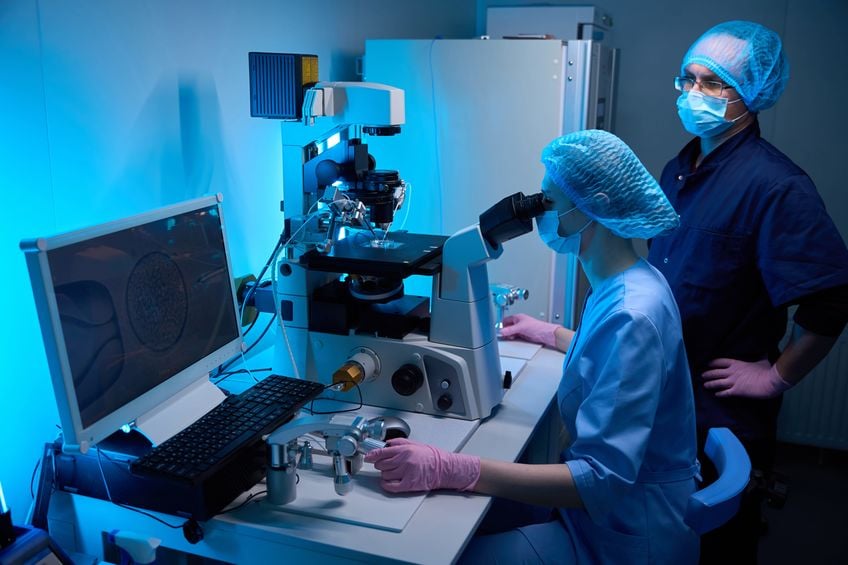
For decades, embryo selection depended on visual grading. Embryologists examined embryos under a microscope to review factors such as cell number, symmetry, fragmentation, and overall appearance. This is a valuable approach that draws on years of experience and expertise, but reliance on the human eye has limitations. Visual grading only offers an overview but cannot capture subtle differences or underlying biological issues. Embryologists can now combine visual grading with modern techniques that add objective data, pattern recognition, and predictive modeling. These tools can add more context and data while finding trends and developmental signs that the human eye cannot see. Combined, embryo selection goes beyond visual grading to offer a complex, more precise assessment.
Time-lapse imaging
In many fertility clinics, time-lapse imaging has become a vital part of advanced embryo selection. As the name implies, specialized incubators equipped with built-in cameras capture images every 10-15 minutes. This process creates a continuous visual record of embryo development. The embryos remain undisturbed in a stable environment while being monitored around the clock. Thanks to time-lapse imaging, embryologists can now observe precise developmental milestones, timing, and growth patterns. Consistent measurements reveal information about embryo quality that goes beyond a microscopic vision. This process finds abnormal events or delayed progression that may lead to challenges with implantation. By analyzing these timelines, fertility clinics have a more complete picture of each embryo’s developmental potential, making selection much more accurate.
Can AI help with selection?
Artificial intelligence (AI) has been a part of almost every aspect of science and medicine, and fertility is no exception. Using special AI algorithms, clinics can take time-lapse imaging a step further by analyzing thousands of data points from embryo development. AI algorithms evaluate timing patterns, cell division sequences, and structural changes. The results can then be compared against massive databases of embryos with known implantation outcomes. Embryo development, as a result, becomes more predictable. This approach allows AI to identify predictive markers that humans cannot consistently detect. Studies suggest that AI-assisted selection can improve implantation prediction accuracy. This is not a replacement for embryologists but a complementary tool that gives data-driven guidance.
The power of PGT
Preimplantation genetic testing (PGT) lies at the center of embryo selection technology and is the most common strategy used by fertility clinics. The goal is to test embryos at the blastocyst stage of development for abnormalities that may impact embryo quality. Using specific testing like next-generation sequencing (NGS), PGT identifies whether an embryo has too many or too few chromosomes. PGT can also help with detecting potential genetic conditions that can be passed on to the child. When done correctly, use of this technology can improve the embryo selection process, helping clinics select embryos that have the highest chance of success. However, PGT does have limitations. The process can take up to 2 weeks to produce results, and there is the risk of errors. Overall, PGT is a low-risk option that studies show improves IVF outcomes when used in the right circumstances.
Better selection, better results
Advanced embryo selection technologies create measurable clinical impact. Time-lapse imaging and AI evaluation have been associated with higher implantation rates, depending on the patient and situation. This extra step reduces the time to pregnancy and improves confidence for patients opting for single embryo transfer (SET), which is used to lower the risk of multiples. More accurate embryo selection can also contribute to lower miscarriage rates by choosing healthy embryos with the most potential. Fertility clinics are also exploring new strategies, like non-invasive metabolomic profiling, to determine cell health without a biopsy. Results still vary based on age, infertility diagnosis, and treatment approach. At the same time, improving selection can provide the best advantage during a delicate process.
Select the best
Embryo selection is a critical part of fertility treatments like IVF. Choosing the least viable embryos can lead to poor implantation, miscarriage, and failed IVF cycles. Maximizing this stage gives patients access to the highest quality embryos for fertility treatments. When considering IVF, knowing if certain embryo selection options are routinely used can help guide decision-making. Every step of IVF matters, and selecting the best embryo can set patients up for success. The choice to pursue embryo selection technologies should align with medical history, age, personal goals, and past IVF attempts.